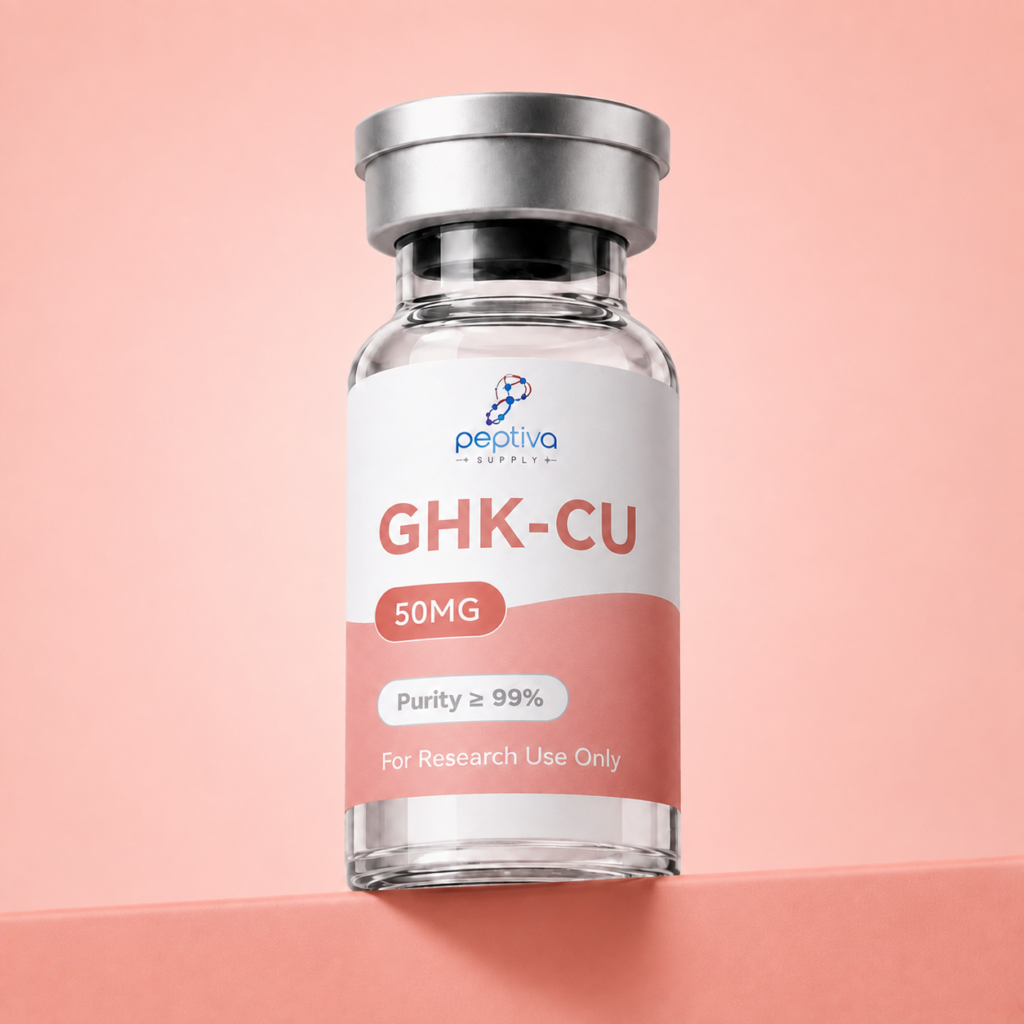
GHK-CU
Verified test results
Every lot, independently verified.
Each batch is analyzed by an accredited third-party laboratory. The report below reflects the identity, purity, and full-panel specification data released with this product.
| Parameter | Result | Specification |
|---|---|---|
| Appearance | White Lyophilized Powder | Meets spec |
| Purity | 99.28% · Pass | u2265 95% |
| Identity (MS) | Confirmed | Meets spec |
| Net peptide content | Not requested | Report |
| Heavy metals | Not detected | Pass |
| Endotoxin | — | Reported |
Representative report from lot D4129 (2602040016 07/21/2026 07/23/2026 GHK-CU). Your order ships with its own lot-specific certificate.
View this batch's certificate →Third-party verified
Certificate of Analysis — by lot
Every lot is HPLC-tested at an accredited lab. Open any batch's certificate below.
2602040016 07/21/2026 07/23/2026 GHK-CU
t 2602040016 02/04/2026 2/7/2026 GHK-CU
About this product
GHK-CU 50mg Research Overview
GHK-CU 50mg is a copper peptide research material supplied for qualified laboratory and scientific research applications. GHK-Cu refers to the copper complex of glycyl-L-histidyl-L-lysine, a naturally occurring tripeptide that has been investigated in biochemical and cellular research. Scientific literature has examined the molecular characteristics of GHK and its ability to interact with copper ions. Research involving GHK-Cu has investigated peptide structure, copper binding, cellular signaling, and other biological parameters in controlled experimental environments. This product is supplied as research material and is not intended for human or veterinary use. Researchers should review applicable laboratory requirements, documentation, handling procedures, and regulations before working with this material.GHK-CU 50mg Product Information
GHK-CU 50mg is supplied for research purposes in controlled laboratory settings. Researchers studying copper peptide materials may evaluate characteristics such as molecular behavior, copper binding, analytical properties, stability, and other parameters relevant to a particular study. GHK is composed of the amino acids glycyl, histidyl, and lysine. The peptide has a strong affinity for copper ions and can form the GHK-Cu complex under appropriate conditions. Research into GHK-Cu has included laboratory studies involving fibroblasts, extracellular matrix components, cellular signaling, and molecular pathways. Experimental findings should always be interpreted according to the specific model and methodology used.GHK-CU Research Focus
Research involving GHK-CU may focus on copper-peptide interactions and the molecular characteristics of the GHK-Cu complex. Researchers may investigate how copper binding influences peptide behavior and related biochemical processes. Published studies have examined GHK-Cu in cellular and biochemical models. Research has included analysis of extracellular matrix-related processes, copper transport, and other molecular characteristics. The results of laboratory studies can vary according to experimental conditions, concentration, methodology, model system, and analytical techniques. Findings from a specific experimental model should not automatically be generalized to other settings.Copper Peptide Laboratory Research
GHK-Cu provides a research model for investigating interactions between a small peptide and copper ions. Laboratory research may examine the formation, stability, transport, or molecular behavior of copper-peptide complexes. Researchers may incorporate GHK-CU 50mg into appropriate laboratory workflows where permitted. Potential research applications depend on the objectives of the laboratory and the experimental design. Suitable analytical methods may include biochemical characterization, molecular analysis, comparative testing, stability evaluation, or other laboratory-based investigations. All research should be performed by qualified personnel using appropriate equipment, established protocols, and applicable laboratory practices.Scientific Literature and Research
GHK-Cu has been investigated in peer-reviewed scientific literature for many years. Published research has examined its biochemical characteristics, copper-binding properties, cellular interactions, and activity in experimental models. For additional scientific background, researchers can review PubMed and related peer-reviewed publications concerning GHK and GHK-Cu. Scientific literature should be evaluated in its complete context, including the experimental model, methodology, concentration, study limitations, and research objectives. Laboratory findings should not be interpreted as evidence of individual health outcomes.Quality and Research Standards
When working with GHK-CU 50mg, researchers should maintain appropriate documentation and laboratory controls. Product identification, batch information, storage requirements, and other available documentation should be reviewed before beginning research. Proper laboratory procedures help maintain consistency throughout an experimental workflow. Researchers are responsible for determining whether a particular research material is appropriate for their intended study and for complying with applicable institutional and regulatory requirements. Laboratory personnel should follow established procedures for handling peptide research materials and maintain appropriate records throughout each study.Research Use and Handling
GHK-CU 50mg is supplied for research purposes only. It is not intended for human consumption, self-administration, or veterinary use. This material should be handled by qualified personnel familiar with appropriate laboratory practices. Researchers should follow applicable procedures for storage, handling, documentation, and disposal. The information provided on this page is intended to describe GHK-CU 50mg as a research material and provide general scientific context. It should not be interpreted as medical advice, a therapeutic recommendation, or a claim regarding individual health outcomes.Additional Research Information
Research involving GHK-CU should follow appropriate laboratory requirements and study protocols. Researchers should maintain accurate records and document relevant experimental conditions throughout the research process. Results should be interpreted using appropriate controls and established analytical methods. The specific characteristics and suitability of any research material should be evaluated according to the requirements of the individual laboratory and research project.Not for human consumption. This product is sold exclusively for laboratory and research purposes. It is not intended to diagnose, treat, cure, or prevent any disease.
All clinical data referenced on this page is drawn from peer-reviewed literature and provided for educational reference only. It should not be interpreted as medical advice or a product claim.
By purchasing, you confirm you are a qualified researcher and will use this material in accordance with all applicable laws and regulations.